Why the Hybrid Shipping Model is Winning on Amazon Australia
The e-commerce landscape for local sellers has shifted dramatically. Between rising peak storage rates and strict operational changes, relying entirely on Amazon’s fulfillment network to store bulk inventory is no longer a viable way to protect your profit margins.
For local businesses looking to optimize their logistics, adopting a more flexible shipping model is the smartest solution. The most successful sellers are transitioning to a Hybrid Shipping Model to safeguard their brands. By pairing Amazon FBA with a local third-party logistics (3PL) partner in Sydney, you can bypass unnecessary fees, streamline operations, and scale your business with total control over your supply chain.
1. What is the Hybrid Model?
The traditional FBA model involves shipping inventory directly from overseas manufacturers straight into an Amazon Fulfillment Center (FC). While this seems convenient, it leaves sellers highly vulnerable to sudden inventory restrictions, long-tenure penalties, and strict compliance rules.
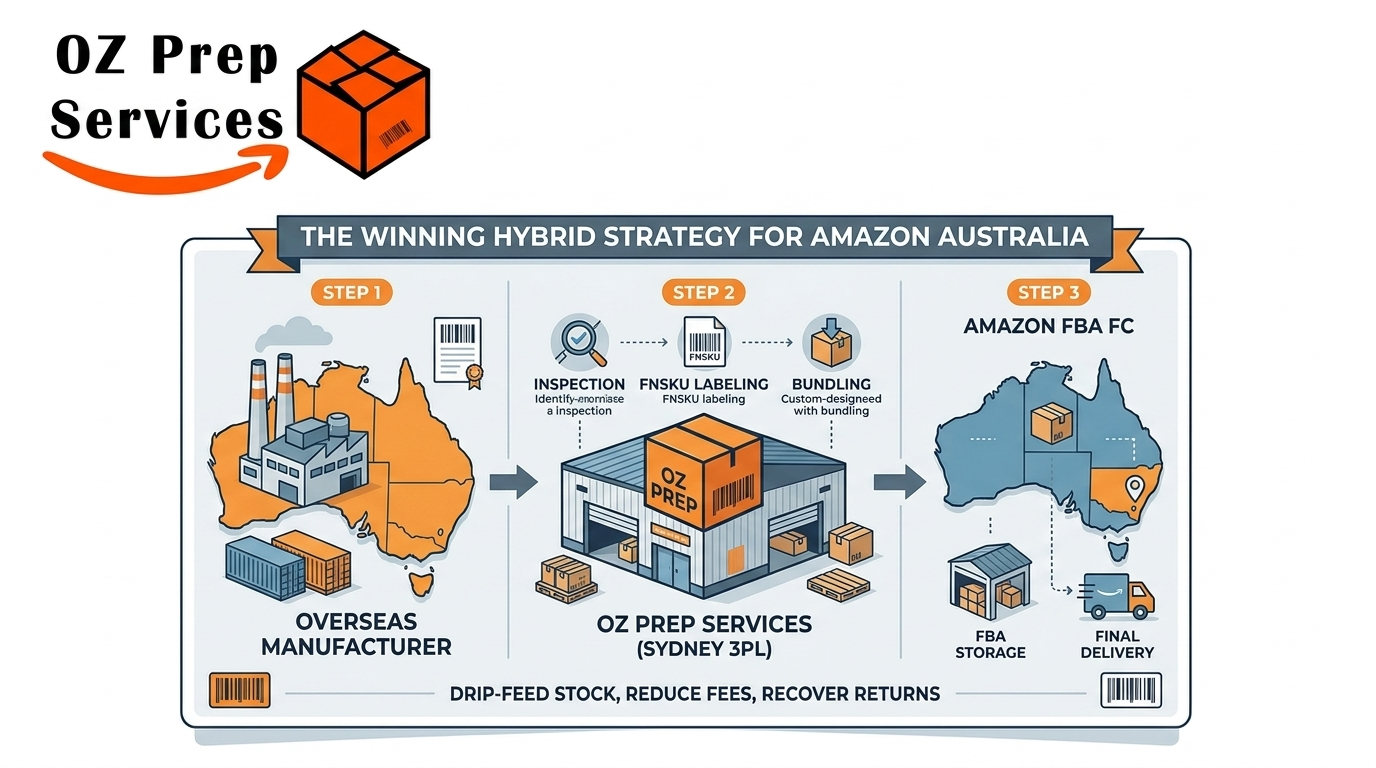
The hybrid shipping model introduces a strategic midway point:
Overseas Manufacturer ➔ Local Sydney 3PL ➔ Drip-Feed to Amazon FBA
Instead of sending 1,000 units directly to Amazon, your bulk stock is held securely at a nearby Sydney 3PL warehouse. From there, your inventory is prepped, labeled, and forwarded to Amazon FBA in smaller, optimized batches based on your actual rolling 30-day sales velocity. Incorporating a dedicated 3PL into your shipping model makes the entire replenishment process seamless and risk-free.
2. Escape the Long-Tenure Storage Trap
Amazon’s warehouses are designed for high-turnover fulfillment, not long-term storage. To discourage sellers from treating fulfillment centers like storage units, Amazon applies aggressive seasonal adjustments and surcharges:
- The Q4 Surge: During peak sales seasons, standard FBA monthly storage costs skyrocket per cubic foot.
- The Long-Tenure Cliff: Surcharges on aged inventory now hit sellers much earlier, starting at just 181 days.
Keeping slow-moving inventory or excess safety stock in an FBA warehouse during these periods quickly erodes profitability. By utilizing a shipping model that relies on a local warehouse in Chipping Norton, you pay predictable, flat storage rates year-round. This allows you to hold your bulk reserves cheaply and transfer only what you need to keep your FBA inventory levels optimized.
3. The End of Amazon’s Internal Prep Services
An important operational change is the discontinuation of internal prep and labeling services across many seller accounts. In the past, sellers could pay Amazon a fee to apply scannable barcode labels or bundle items together.
Today, if your products arrive at an Amazon Fulfillment Center without exact FNSKU labeling or proper poly-bagging, they will be flagged. This leads to costly inbound problem fees, shipment rejections, or account suspensions.
Adopting a modern shipping model that includes pre-FBA checks ensures every single unit is thoroughly inspected, packaged, and labeled before it leaves the warehouse door. When you update your business to this shipping model, proper scannable barcodes are applied without the premium Amazon pricing.
4. Faster Restocking to Protect Your IPI Score
Your Inventory Performance Index (IPI) score directly dictates your storage limits. To maintain a high score, you must balance your sell-through rate while avoiding out-of-stock scenarios.
Relying on direct shipments from overseas factories presents major risks. Sea freight delays, customs inspections, and port congestion can leave your listing inactive for weeks, damaging your keyword rankings and triggering low-inventory alerts.
When you use a local shipping model, your supply chain is insulated against overseas transit delays. Your inventory can move from a Chipping Norton warehouse into the major Western Sydney Amazon Fulfillment Centers in just a few days, keeping your listings active.
5. Profit Recovery Through Returns Management
Handling customer returns is another major challenge for e-commerce sellers. When an item is returned, Amazon often marks it as unfulfillable. If you don't have a local Australian address to receive these goods, your options are either to pay high disposal fees or have the inventory destroyed.
A hybrid shipping model turns this loss into recovered revenue. By setting your automated removal orders to ship directly to your local 3PL partner, returned items can be manually inspected, refurbished, re-bagged, and sent back to FBA.
6. Optimising the Sydney Logistics Advantage
Operating out of South West Sydney offers unparalleled logistical leverage. Being positioned right off the M5 corridor puts your backup stock within a short drive of major Amazon fulfillment hubs like BWU1 and BWU2. This close proximity drastically reduces your local transit times and inbound shipping costs.
Whether you are a Sydney-based brand looking for hands-on control over your logistics or an international seller expanding into the local market, adopting a hybrid shipping model is the smartest way to minimize fees, maximize margins, and scale your brand sustainably.